 1300 314 788
Professor Peter Greste
 Print
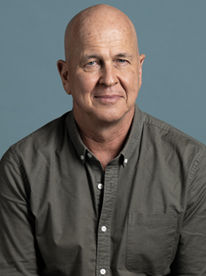
PrintProfessor Peter Greste is Australia’s most unlikely convicted terrorist. A foreign correspondent with 25 years experience. Peter was in Egypt covering the unfolding political crisis when he and two colleagues were arrested and charged with terrorism offences.
Speaker Categories
- After Dinner Speakers
- Business Speakers
- Community / Social Conscience Speakers
- Inspirational Keynote Speakers
- Journalists and Current Affairs Speakers
- Overcoming Adversity / Resilience Speakers
- Political and International Affairs Speakers
- Workplace Safety/ OH&S Speakers
Testimonials for Professor Peter Greste
Peter Greste was amazing and so inspiring. We are proud the conference was able to share the latest in research, innovation and solutions on Collaboration for prevention and change. The keynote speakers were exceptional. In particular, the positive message from Peter Greste about how he overcame the adversity of his experience to deliver a positive message. His capacity to look forward was inspirational.
Comcare
Fee Range: POA
Professor Peter Greste's Biography
Professor Peter Greste is Australia’s most unlikely convicted terrorist. A foreign correspondent with 25 years experience. Peter was in Egypt covering the unfolding political crisis when he and two colleagues were arrested and charged with terrorism offences.
After leaving Australia in 1991, he worked in London for the BBC, CNN and Reuters before being appointed the BBC’s Afghanistan correspondent. He moved to London in 1997 to help the BBC launch its 24-hour domestic news network, News 24. The following year, he went back on the road, covering Latin America for five years.
After the 9/11 attacks, he briefly returned to Afghanistan as a part of the BBC’s award-winning coverage of the collapse of the Taliban. Peter relocated to Africa in 2003, reporting from some of Eastern and Southern Africa’s most volatile regions and in 2011, he won a prestigious Peabody Award for a BBC documentary on Somalia.
Later in 2011, Peter left the BBC and joined Al Jazeera as its East Africa Correspondent. He went to Cairo to cover the Christmas/New Year period in 2013, and two weeks after he arrived, security agents burst into his hotel room and arrested him and his colleagues. He was charged with aiding a banned organization – the Muslim Brotherhood; financing a banned organization and broadcasting false news to undermine national security. The court convicted Peter and his colleagues, and sentenced them to between seven and ten years of hard labour.
While in prison, Peter began a masters degree in International Relations with Griffith University. Later in 2015, became an honorary doctor of the university, for his services to journalism.
In February 2015, Peter was deported on an order of the Egyptian president, though he was included in the subsequent retrial that began a month later. Peter and his colleagues were once again convicted in the retrial though with their sentences reduced to three years. Their case has been widely condemned as an abuse of due process and their fundamental human rights.
After an intense international campaign, he was released after 400 days.
In April 2016 Peter was awarded the ANZAC Peace Prize. He has also been awarded the International Association of Press Club's Freedom of Speech Award; and the Australian Human Rights Commission Medal.
Peter’s book 'First Casualty" was published in October 2017 where he talks about his experiences in Egypt and on the role of journalism in the War on Terror.
In 2018 Peter took up the position of UNESCO Chair of Journalism and Communications at the University of Queensland.
In 2022, Peter started as an adjunct professor of journalism at Macquarie University. The story of how his family took on the Egyptian government to get him out of prison is told in the book Freeing Peter (Penguin 2016).
Peter is Australia’s most recognisable media freedom activist, and regularly writes for The Guardian, The Australian, Crikey, the Sydney Morning Herald and The Conversation.
For his advocacy, he has won numerous awards including from the Royal Television Society in the UK, the International Association of Press Clubs, the Australian Human Rights medal, and a Walkley Award.
In his inspiring, entertaining, and at times harrowing presentation, Peter speaks about his experience behind bars, the psychological strategies he used to survive, and the lessons he still draws on today.
Based on the riveting true story of Australian war correspondent Peter Greste’s shocking imprisonment in Egypt in 2013, THE CORRESPONDENT was released in April 2025. The movie is a gripping biographical thriller about the relentless defence of the truth and triumph of the human spirit.
Contact Helene Greenham directly to enquire about Peter Greste for your event – helene@platinumspeakers.com.au
Speaking Topics Include
Fight for freedom: Hear how Australian journalist Peter Greste survived over 400 days in an Egyptian prison for the crime of doing his job!
Coping with crisis: Lessons in resilience from a convicted terrorist
This topic explores the experience of imprisonment, and the psychological strategies Greste developed to survive.
Abandon hope: why the “cross-your-fingers” strategy is dangerous
This topic unpacks one of Greste’s most profound lessons of prison – that ‘hope’ encourages us to focus on things beyond our control, and avoids dealing with the most powerful thing we can control – our own minds.
The Grey Zone: How 9/11 created a conflict over ideas that is destroying democracy
This topic explores the zone of tolerance – the space between the blacks-and-whites of polarized extremes essential to democracy, but that appears to be unravelling. The recent US election saw the Grey Zone diminish, along with the rise of far-right parties in Europe.